Ans: An environment that can be accessed by personal devices, but the data remains in the controlled area, thus ensuring compliance and preventing data leakage possibilities.
BYOD & MDM vs. Virtual Mobility: How to Build a Secure, Flexible, and Scalable Remote Work Strategy
POST BY
PUBLISHED
May, 12, 2026

Remote and hybrid work has permanently altered how organizations operate, forcing IT leaders to rethink how to secure and manage employee devices. This shift has created a tension between productivity and control, especially when people use personal devices to access sensitive corporate data.
BYOD and MDM have been the default strategy to solve this challenge. But as threats evolve, many organizations are exploring virtual mobility solutions as a more secure alternative.
Let’s understand the costs, benefits, and uses of each method to help your organization make the right choice.
Key Takeaways
- Workers often prefer using their own devices, which can result in increased productivity and satisfaction
- As remote work scales, these limitations become more pronounced. Organizations begin to realize that managing devices does not fully solve the problem of securing data
- Virtual mobility represents a major shift away from securing the device and toward securing the environment where the data is actually accessed
- Some organizations use MDM for general users while adopting virtual mobility for high-risk roles or sensitive workflows
Table of Contents:
- The Rise of BYOD and the Limits of Traditional Device Control
- Why Virtual Mobility Is Reshaping Remote Work Security
- Understanding a Data-First Security Model
- Reframing Security Architecture in a Virtual Mobility Model
- Scalability and Operational Considerations for Enterprises
- Choosing Between BYOD, MDM, and Virtual Mobility Strategies
- Conclusion: The Future of Secure and Flexible Work Environments
- FAQs
The Rise of BYOD and the Limits of Traditional Device Control
BYOD programs gained popularity because they reduce hardware costs considerably and improve employee flexibility. Workers often prefer using their own devices, which can result in increased productivity and satisfaction.
To manage these environments, firms usually deploy MDM platforms that reinforce policies such as encryption, password requirements, and remote wipe capabilities.
While effective to a certain degree, this model introduces many limitations. The biggest challenge is that corporate data can still be present on physical devices. Even with strong controls, businesses cannot fully avoid risks such as screen capture, data leakage through personal apps, or compromised endpoints.
Additionally, MDM can create friction between privacy and oversight. Employees may feel uncomfortable with corporate visibility into their personal devices, leading to resistance or partial adoption. This tension becomes especially significant in regulated industries where compliance and user privacy must be carefully balanced.
As remote work scales, these limitations become more pronounced. Organizations begin to realize that managing devices does not fully solve the problem of securing data.
Why Virtual Mobility Is Reshaping Remote Work Security
Virtual mobility represents a major shift away from securing the device and toward securing the environment where the data is actually accessed. Instead of storing corporate information on a smartphone or laptop, the data remains in a controlled environment. The user interacts with a secure virtual session, while no actual data remains on the endpoint.
This simple approach considerably reduces the attack surface. If a device is lost or compromised, the organization does not risk exposing locally stored sensitive information. It also enhances compliance as data governance can be enforced centrally rather than distributed across many endpoints.
Unlike traditional MDM, virtual mobility minimizes the need for intrusive device monitoring. This can improve user privacy while still maintaining strong security controls.
The Hypori guide explains this shift by comparing BYOD and MDM with virtual mobility, helping organizations differentiate whether a device-centric or data-centric model is favourable for their security requirements.
The basic idea is not about controlling the device by applying more restrictions, but about reducing the amount of sensitive data placed on the device in the first place.
Understanding a Data-First Security Model
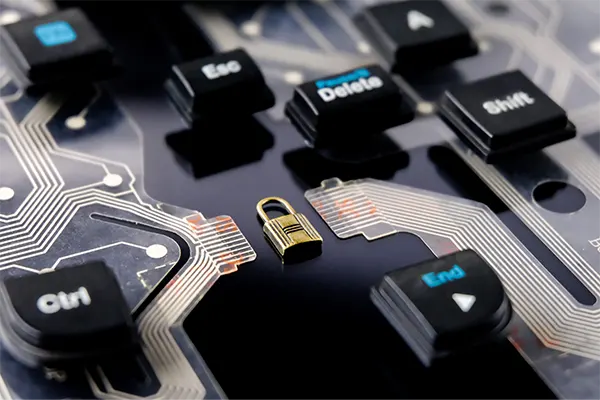
To understand this shift, it helps to look at how a virtualized mobile environment functions practically. Instead of delivering corporate apps and data directly onto the endpoint device, virtual mobility utilizes a secure virtual layer that keeps sensitive resources separate from physical devices.
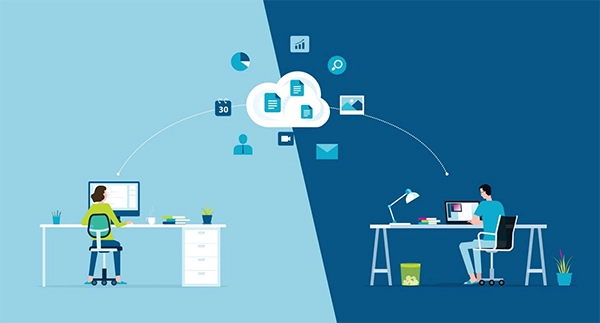
In this model, the user may interact with a virtual mobile environment, while processing and data storage remain within a secure cloud or data center environment. The endpoint essentially becomes a display and input tool rather than a storage location.
This architecture changes the security equation. Instead of trying to secure thousands of potentially vulnerable devices, organizations can secure a centralized infrastructure. Sensitive data stays within the controlled environment, which significantly reduces exposure risks.
Another advantage is the separation between personal and work environments. Employees can use their own devices without allowing organizations deep access to personal data. This helps address one of the major criticisms of traditional BYOD programs: privacy intrusion.
Reframing Security Architecture in a Virtual Mobility Model
The transition from BYOD and MDM to virtual mobility is not just a tool change. It is a structural redesign of enterprise security architecture. In earlier models, security is enforced at the device level. Firewalls, encryption, and policy enforcement all assume that the endpoint is a part of a trusted environment.
Alternatively, in a virtual mobility model, trust is shifted away from the device, where the endpoint is considered untrusted by default, and security controls are enforced within a particular environment.
This has several implications:
- First, data leakage risks are significantly reduced because data is not stored locally.
- Second, threat detection becomes more centralized. Instead of monitoring thousands of endpoints, security teams can focus on activity within a controlled environment.
- Third, incident response becomes faster. If a threat is detected, access can be revoked without requiring device-level intervention.
A resource like the Hypori blog post on BYOD, MDM, and virtual mobility can assist decision-makers to better understand how this architecture works towards enterprise mobility, especially in environments that handle sensitive or regulated data.
However, the model also requires strong backend capabilities and careful planning to ensure performance and user experience are maintained.
Fun Fact
In many virtualized setups, data never leaves the server. The user is essentially watching a video stream on their desktop, meaning they cannot copy, paste, or download data on their personal device.
Scalability and Operational Considerations for Enterprises
Scalability is one of the most important factors when considering any remote work security strategy. BYOD and MDM systems grow by increasing endpoint management capabilities, but this also increases complexity a lot. Every device becomes a potential point of failure, requiring multiple updates, patching, and compliance checks.
Virtual mobility reduces this burden by centralizing control. However, it shifts the scaling challenge to infrastructure capacity. Organizations must ensure that virtual environments can handle large numbers of concurrent sessions without performance degradation.
In this context, the Hypori guide is useful for organizations comparing the costs, benefits, and savings of BYOD, MDM, and virtual mobility. Instead of looking only at upfront costs, decision-makers should also consider long-term support requirements, endpoint risk, infrastructure planning, and administrative overhead.
That said, adopting virtual mobility does not come without its own challenges, as it requires strong network reliability, robust cloud infrastructure, and careful planning for sensitive applications. Businesses must also consider user experience, as any lag or performance issues can clearly affect productivity.
Despite these challenges, the scalability benefits can be significant. As organizations grow, adding new users to a virtual environment may be more efficient than provisioning and securing new physical devices.
Choosing Between BYOD, MDM, and Virtual Mobility Strategies
Selecting the right strategy depends on the enterprise’s priorities, risk tolerance, and operational complexity. BYOD with MDM remains a practical solution for many businesses, especially with moderate security requirements and limited regulatory exposure. It offers flexibility and lower upfront costs, but it does not eliminate endpoint risk.
Virtual mobility, on the other hand, is better suited for environments where data protection is critical. Industries such as defense, healthcare, and finance often prioritize architectures that minimize data exposure at the device level.
A balanced method is often the most useful. Some organizations use MDM for general users while adopting virtual mobility for high-risk roles or sensitive workflows. This hybrid working allows flexibility while also reducing exposure where needed.
When reviewing resources such as Hypori’s guide on BYOD, MDM, and virtual mobility, decision-makers should focus less on any single technology and more on the underlying principle: shifting security away from personal devices and toward controlled access environments. This conceptual shift is what ultimately defines modern enterprise mobility strategy.
Conclusion: The Future of Secure and Flexible Work Environments
The evolution from BYOD and MDM toward virtual mobility reflects a broader transformation in enterprise security thinking. Instead of trying to control every endpoint, organizations are increasingly focusing on controlling access to data itself.
This shift enables stronger security, improved privacy, and more scalable infrastructure models. However, it also requires rethinking long-standing assumptions about how work devices should function.
As remote and hybrid work continues to expand, organizations will likely adopt multiple strategies that combine endpoint management with virtualized environments. Guides like the one from Hypori can help firms compare methods from a cost, security, and operational perspective.
Ultimately, the most effective strategy is not about choosing a single model, but about understanding how each approach fits into a broader, adaptive security architecture designed for a distributed world.
FAQs
Q1) What is a virtualized environment?
Q2) Is a virtualized environment beneficial?
Ans: It depends on the organization’s requirements and its ability to tolerate risk. But it does provide easier management of sensitive data through a managed interface.
Q3) What are the downsides of a BYOD strategy?
Ans: A BYOD strategy does provide access to familiar devices to employees, but also allows them to hold onto corporate data on personal gadgets, making it a potential threat to future problems in security management.
Q4) What is the best approach?
Ans: The best method is to go ahead with a hybrid approach, where BYOD is used for general tasks, and critical tasks are performed under strict and enforced virtual environments, thereby providing the benefits of both methods and ensuring greater security.
Related Posts