
These professional courses concern how AI impacts modern security systems, including AI-driven threat detection, adversarial attacks, automation, and machine learning security.
AI Cybersecurity Training Courses: Build Skills for the Future of Security
POST BY
PUBLISHED
May, 12, 2026

“The advance of technology is based on making it fit in so that you don’t really even notice it.” — Bill Gates (Businessman & Philanthropist)
Artificial intelligence has also embedded itself in modern cybersecurity, from fraud detection and identity verification to cloud infrastructure and threat monitoring. Also, cybercriminals are using AI for attacks and exploiting vulnerabilities.
Besides, on job boards, 10% of cybersecurity positions state that candidates are required to have some type of AI skill to be considered.
As a result, AI cybersecurity training courses are becoming essential for professionals who want to stay relevant in the security industry. These programs go beyond traditional network defense and introduce learners to adversarial AI, machine learning security, automated threat detection, and intelligent system protection.
Platforms like OffSec have become well known for their hands-on, performance-driven approach to cybersecurity education, helping learners build practical skills that reflect real-world attack environments.
This article explores how AI cybersecurity training is evolving, the skills professionals need most, and how structured learning paths can prepare security teams for the future.
KEY TAKEAWAYS
- AI is transforming both cybersecurity threats and defense strategies, creating demand for specialized training.
- Modern cybersecurity roles require a combination of traditional security knowledge and AI-related skills.
- Hands-on learning through labs, simulations, and real-world attack scenarios is becoming the industry standard.
- Performance-based certifications and structured learning paths can significantly improve long-term cybersecurity career growth.
Table of Contents:
- The Shift from Traditional Security to AI-Driven Threat Environments
- Core Competencies Required in AI Cybersecurity Roles
- How AI Is Transforming Cybersecurity Training Models
- Practical Learning Through Labs, Simulations, and Real-World Scenarios
- The Growing Importance of AI Security Certifications
- Building a Structured Learning Path for AI Cybersecurity
- The Future of AI in Cybersecurity Education
- Conclusion
- FAQs
The Shift from Traditional Security to AI-Driven Threat Environments
Cybersecurity once focused primarily on protecting networks, endpoints, and applications through tools like:
- Firewalls
- Antivirus systems
- Intrusion detection platforms
However, the rise of AI has expanded the attack surface significantly.
Modern ML systems are now used for decision-making in areas such as:
- Fraud detection
- Identity verification
- Threat monitoring
While these systems improve efficiency, they also introduce new vulnerabilities. Attackers can manipulate training data, exploit model weaknesses, or use adversarial inputs to deceive AI systems.
For example, slight modifications to an image or text input can cause an AI model to misclassify it entirely. In cybersecurity contexts, this could mean bypassing detection systems or tricking automated fraud filters.
Training programs are now evolving to reflect these risks. Instead of focusing solely on perimeter defense, learners are introduced to concepts like model integrity, data poisoning, and adversarial machine learning. These topics are becoming increasingly important in real-world security operations.
Core Competencies Required in AI Cybersecurity Roles
Success in AI-driven cybersecurity requires a blend of traditional security expertise and emerging technical capabilities like data science and machine learning concepts.
Network security is still a core requirement. Professionals must understand how data flows through systems, how vulnerabilities emerge, and how attackers exploit misconfigurations. However, this is now complemented by knowledge of how AI systems process and interpret that data.
Programming skills are also critical. Python is widely used for building security tools, analyzing datasets, and interacting with machine learning models. Familiarity with libraries used in data analysis and AI development is increasingly valuable.
Equally important is analytical thinking. Security professionals must interpret large volumes of alerts generated by AI-based systems and distinguish between false positives and genuine threats. This requires not only technical knowledge but also experience and intuition.
In structured learning environments such as those offered by OffSec, learners are often encouraged to develop this blend of skills through practical labs and scenario-based exercises rather than purely theoretical study.
How AI Is Transforming Cybersecurity Training Models
Traditional cybersecurity education relied heavily on:
- Lectures
- Static labs
- Theoretical exercises
They were good for foundational knowledge, but struggled to replicate the complexity of real-world attacks of the present.
AI cybersecurity training courses have introduced a more dynamic approach. Modern platforms use adaptive simulations that evolve based on learner actions. If a trainee successfully defends against one type of attack, the system may introduce a more complex variation.
This creates a continuous learning loop where students must think critically rather than memorize solutions. It also mirrors real-world conditions, where attackers constantly adapt their methods.
Organizations like OffSec have contributed significantly to this shift by emphasizing hands-on, performance-based learning. Instead of answering multiple-choice questions, learners engage directly with systems, identify vulnerabilities, and execute controlled exploitation techniques.
This method ensures that knowledge is not just theoretical but deeply practical, preparing professionals for real operational environments.
Practical Learning Through Labs, Simulations, and Real-World Scenarios
Hands-on experience is valuable in cybersecurity education. Reading about attack techniques is useful, but applying them in realistic environments develops the instincts professionals need in actual security roles.
Modern AI cybersecurity training courses emphasize interactive labs where learners work in environments that closely mimic enterprise systems. These labs may include cloud infrastructure, web applications, and AI-driven security tools.
In advanced training pathways such as those associated with OffSec, learners are often exposed to realistic penetration testing scenarios. These exercises require them to identify weaknesses, exploit vulnerabilities, and document their findings in a structured manner.
This approach helps build critical thinking and problem-solving skills. It also teaches learners how to operate under pressure, which is essential in incident response and red team environments.
Capture-the-Flag (CTF) challenges are another widely used training method. These competitions simulate cybersecurity attacks in a gamified format, encouraging creativity and rapid decision-making.
Gamified cybersecurity learning has many pros:
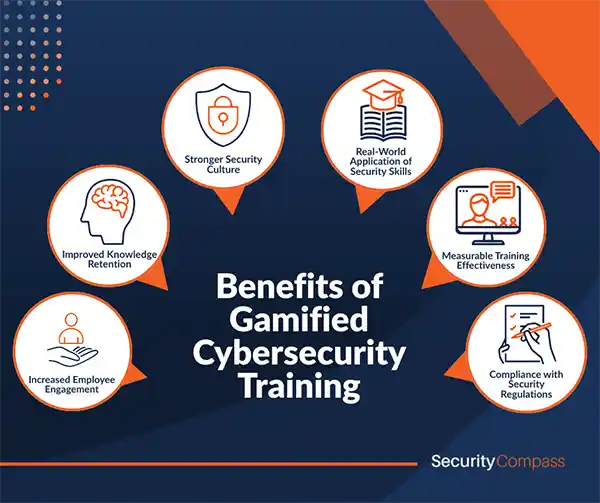
Together, these methods create a learning environment that is both challenging and highly practical.
The Growing Importance of AI Security Certifications
Certifications are still important for cybersecurity career advancement. They help validate technical expertise and demonstrate a professional’s ability to perform under industry standards.
Traditional certifications like CompTIA Security+ and CISSP cover essential security concepts. However, as AI becomes more integrated into systems, specialized certifications are gaining importance.
Performance-based certifications offered through platforms like OffSec are particularly valued because they assess real-world skills rather than theoretical knowledge. Candidates must complete practical tasks in controlled environments, demonstrating their ability to solve complex security problems.
This type of assessment is especially relevant in AI cybersecurity, where practical understanding of systems is more important than memorization of concepts.
Employers increasingly recognize the value of such certifications, especially for roles involving penetration testing, security engineering, and AI system analysis.
Building a Structured Learning Path for AI Cybersecurity
To progress efficiently in a vast field like cybersecurity, you need to swear by a structured roadmap.
The foundation typically begins with networking, operating systems, and basic scripting. These skills provide the groundwork for understanding how systems operate and where vulnerabilities may exist.
Once this foundation is established, learners can move into intermediate topics such as vulnerability analysis, penetration testing, and security operations. At this stage, exposure to real-world environments becomes increasingly important.
Advanced learning introduces AI/ML security concepts, which include understanding how:
- Models are trained
- They can be attacked
- They can be defended
Training ecosystems associated with OffSec often follow this structured progression, allowing learners to gradually build confidence while tackling increasingly complex challenges.
Soft skills such as communication and documentation are also essential. Security professionals must be able to clearly explain technical findings to non-technical stakeholders, especially in enterprise environments.
The Future of AI in Cybersecurity Education
AI is reshaping cybersecurity and related education. Training platforms are expected to become more adaptive, personalized, and intelligent over time.
AI-driven learning systems may soon analyze student performance in real time and adjust training paths automatically. This would allow learners to focus more on their weak areas while progressing faster through concepts they already understand.
Generative AI is also expected to play a major role in creating dynamic training environments. These systems could generate new attack scenarios on demand, ensuring that learners are constantly challenged with fresh problems.
As organizations continue to integrate AI into their security infrastructure, the demand for professionals who understand both offensive and defensive AI techniques will continue to grow.
However, this also means that cybersecurity education must remain flexible and continuously updated. Static knowledge is no longer sufficient in a field that evolves as quickly as artificial intelligence.
Conclusion
AI has changed cybersecurity completely, be it in attacks, defense, or training.
AI cybersecurity training courses provide the tools and knowledge needed to understand this new environment. They combine traditional security principles with modern AI concepts, helping professionals build well-rounded expertise.
Platforms like OffSec play an important role in this ecosystem by offering hands-on, practical training that reflects real-world challenges. Their approach emphasizes learning through experience, which is essential in a field where theoretical knowledge alone is not enough.
As cyber threats become more intelligent and adaptive, professionals who invest in AI-focused cybersecurity training will be better prepared to secure the systems of the future.
FAQs
What are AI cybersecurity training courses?
Do I need programming knowledge for AI cybersecurity?
Basic programming knowledge, especially in Python, is highly beneficial. It helps professionals automate tasks, analyze data, and work with machine learning tools used in cybersecurity.
Are hands-on labs important in cybersecurity training?
Yes. Practical labs and simulations help learners apply theoretical concepts in realistic environments, improving problem-solving skills and operational readiness.
Which certifications are valuable for AI cybersecurity careers?
Foundational certifications like Security+ and CISSP remain useful, while performance-based certifications from providers such as OffSec are increasingly valued for demonstrating real-world technical ability.
Related Posts