Ans: It is a large language model designed to understand human prompts and inputs, and give useful solutions or replies according to the given information.
Why AI Red Teaming Is Essential for Safe and Reliable AI Systems
POST BY
PUBLISHED
May, 12, 2026
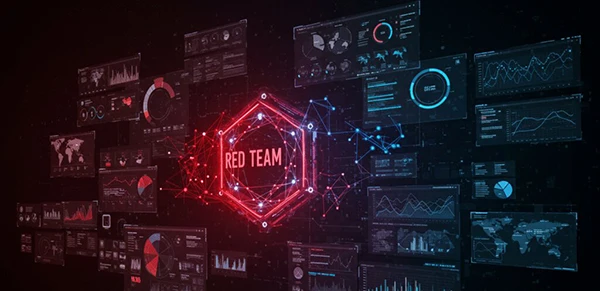
AI has become a necessity in the modern digital infrastructure, from search engines and recommendation systems to healthcare tools and financial decision-making platforms. But as these systems grow complex, risk also follows suit.
This is where AI red teaming plays an important role in ensuring that unpredictable behavior of AI is kept at way, and a structured approach is followed. They test AI systems and uncover their weaknesses, so that they may be fixed for the future.
Let’s understand why following this approach is necessary for modern organizations and how they benefit from it.
Key Takeaways
- Modern AI systems require rigorous safety testing to identify existing issues and fix them
- LLM models are prone to prompt injection cyber attacks that can break the whole model and steal all the data
- Automated testing is more beneficial as it provides an in-depth analysis of issues and reports back to the admin effectively
- Models keep evolving, and the security practices must keep up with them to ensure the overall security of the data and information present inside them
Table of Contents:
- Why AI Systems Require Rigorous Safety Testing
- What AI Red Teaming Means in Modern Security Practice
- How Adversarial Testing Reveals Hidden Model Vulnerabilities
- The Role of Structured Evaluation Frameworks in AI Safety
- Practical Workflows Used in AI Red Teaming Programs
- Real-World Risks Discovered Through AI Red Teaming
- Challenges in Scaling AI Safety Evaluations Across Systems
- Future of AI Assurance and Continuous Monitoring
- FAQs
Why AI Systems Require Rigorous Safety Testing
Modern AI tools are trained by using different datasets, all designed to generalize across various scenarios. While this does provide them flexibility, it also makes their behavior tough to fully predict.
A model might perform well in controlled testing environments but fail entirely when exposed to unrecognized prompts or varying inputs.
This unpredictability is not just a technical fault; it’s a major safety issue. AI systems used in healthcare, finance, or a legal context can cause real-world damage if the outputs are all wrong. Even in consumer applications, biased or unsafe responses can downgrade trust and affect user confidence.
This is why rigorous safety testing helps figure out these potential risks early, ensuring that models behave as they should under pressure and do not produce harmful outputs when challenged.
This is very important for generative AI systems, which can create new content rather than simply retrieve information.
Organizations increasingly recognize that traditional quality assurance methods are not enough. Instead, they are adopting adversarial testing approaches that simulate real-world attacks and edge cases.
What AI Red Teaming Means in Modern Security Practice
AI red teaming is a structured process where experts deliberately attempt to “break” an AI system. The goal is not to further damage the system but to identify its weaknesses. These experts simulate malicious users, edge-case scenarios, and unusual inputs to observe how the model actually responds.
Unlike regular resting, which focuses on expected behavior, red teaming explores the boundaries of what an AI system can do and where it is bound to fail.
This also includes investigation of hallucinations, bias amplification, data leaks, and prompt injection vulnerabilities.
In modern AI security practice, red teaming has become a foundational layer of defense. It performs automated testing, conducts human review, and monitors systems. Together, these layers help create a more stable AI ecosystem.
Some organizations use specialized platforms such as Noma Security to structure and manage these evaluations. While tools differ, the core principle remains the same: simulate adversarial behavior to improve system robustness.
Red teaming is not a one-time activity. As AI systems evolve, they must be continuously tested against new types of threats and usage patterns.
How Adversarial Testing Reveals Hidden Model Vulnerabilities
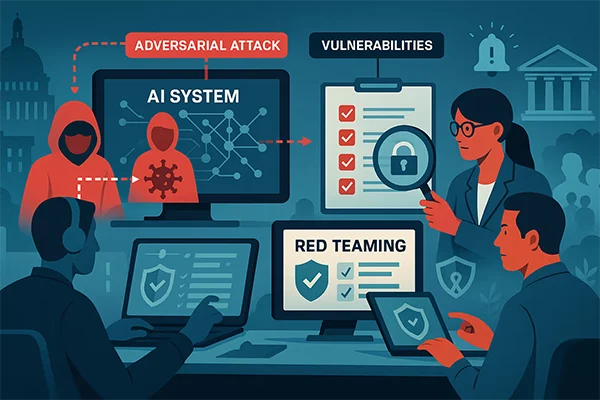
One of the most vital aspects of AI red teaming is its ability to locate vulnerabilities that are not usually visible during normal testing. Such hidden issues often emerge only when a system is pushed beyond its regular usage patterns.
For instance, a language model might refuse harmful requests under normal conditions but fail when prompts are clearly defined. Similarly, it may generate biased outputs when given culturally sensitive inputs.
Adversarial testing exposes these weaknesses by sequentially exploring edge cases. Testers may use prompt manipulation or multi-step reasoning attacks to observe how the system responds.
This process reveals gaps in alignment, the degree to which an AI system’s behavior matches human intentions. It also highlights inconsistencies in safety filters and moderation layers.
In some advanced testing environments, teams using frameworks like Noma Security integrate automated adversarial generation with human evaluation. This combination helps scale testing efforts while maintaining depth and accuracy in findings.
Ultimately, the goal is not just to find failures but to understand why they occur. This insight is essential for improving model training and reinforcement strategies.
The Role of Structured Evaluation Frameworks in AI Safety
As AI systems become more complex, ad hoc testing is no longer sufficient. Structured evaluation frameworks provide a systematic way to assess model behavior across different dimensions of safety, fairness, and reliability.
These frameworks define clear categories of risk, such as toxicity, misinformation, privacy leakage, and bias. They also establish benchmarks for acceptable performance under stress conditions.
A well-designed evaluation framework allows organizations to compare models consistently over time. It also helps prioritize which vulnerabilities need immediate attention and which are lower risk.
Some platforms, including Noma Security, prioritize structured workflows that combine automated testing pipelines with human oversight. This hybrid method makes sure that both patterns and behavioral issues are recorded.
Importantly, structured evaluation is not static. It needs to evolve alongside the AI systems that it tests. As new threats take centre stage, such as prompt injection attacks in LLMs, evaluation criteria must be updated accordingly.
Fun Fact
Modern AI red teams often include social scientists and psychologists, not just security engineers, to understand how AI can be manipulated through persona manipulation and conversation.
Practical Workflows Used in AI Red Teaming Programs
AI red teaming is most effective when it follows a disciplined workflow. This typically begins with defining the scope of the test, including the model’s intended use cases and risk areas.
Next, testers design adversarial prompts and scenarios. These are crafted to mimic real-world misuse or edge-case behavior. The system is then evaluated against these inputs, and responses are carefully analyzed.
Findings are documented and categorized based on severity. High-risk vulnerabilities may include data leakage or harmful content generation, while lowering risk issues that may involve small inconsistencies or formatting issues.
After analysis, developers work to mitigate identified issues. This may involve retraining models, adjusting safety filters, or improving prompt handling mechanisms.
In more mature environments, modern platforms help streamline these workflows by providing centralized dashboards, testing libraries, and reporting tools, enabling teams to scale their processes without losing visibility into individual vulnerabilities.
The workflow is iterative. Once fixes are applied, systems are retested to ensure that vulnerabilities have been properly addressed.
Real-World Risks Discovered Through AI Red Teaming
AI red teaming has uncovered a wide range of real-world risks across different systems. One common issue is prompt injection, where malicious instructions embedded in user input override system guidelines.
Another common finding is data leakage, where models unintentionally reveal private information from their training data. This is particularly concerning in systems trained on large, unfiltered datasets.
Bias is also a major concern. Red teaming often reveals that models may produce skewed outputs depending on phrasing, context, or demographic references.
Such risks are not just theoretical. They have been observed in deployed systems spanning different industries, and without proactive testing, such issues can scale quickly and impact greater audiences.
Organizations that incorporate structured testing strategies, including those supported by Noma Security, are much better positioned to identify and mitigate such risks before they reach production environments.
Challenges in Scaling AI Safety Evaluations Across Systems

As AI adoption grows, one of the biggest challenges is scaling safety evaluations across multiple models and deployment environments. Each system may have different architectures, training data, and use cases, making standardized testing difficult.
Another challenge is the speed of AI development. Models are updated regularly, meaning that safety testing must keep up its pace with rapid cycles. This creates a lot of pressure on teams to automate as much of the red teaming process as possible without decreasing depth.
There is also the issue of evolving attack methods. As defenses improve, adversaries develop more sophisticated techniques to bypass them. This requires continuous adaptation of testing strategies.
Many organizations also address these challenges by using platforms like Noma Security in their AI development pipelines. These systems help automate repetitive testing tasks while allowing human experts to focus on complex analysis.
Despite these tools, scaling AI safety remains a resource-intensive process that requires ongoing investment and expertise.
Future of AI Assurance and Continuous Monitoring
The future of AI safety is moving toward continuous monitoring rather than periodic testing. Instead of evaluating systems only before deployment, organizations are increasingly tracking model behavior in real time.
This shift recognizes that AI systems operate in dynamic environments where risks can emerge after deployment. Continuous monitoring allows teams to detect anomalies, drift, and new vulnerabilities as they arise.
AI red teaming will remain a huge part of this ecosystem, but it will perform better when accompanied by automated detection systems and feedback loops. Together, these approaches form a larger safety net.
Tools such as Noma Security are part of this broader trend, helping organizations integrate safety evaluation into every stage of the AI lifecycle rather than treating it as a final checkpoint.
As AI goes on to become deeply integrated into critical infrastructure, the importance of robust assurance mechanisms only increases. The goal is not just to create powerful AI systems, but to ensure they are safe, reliable, and aligned perfectly with human values.
In the end, AI red teaming is not just a technical practice—it is a foundational discipline for building trust in the next generation of intelligent systems.
FAQs
Q1) What is LLM?
Q2) Why is it necessary to perform AI red teaming?
Ans: AI red teaming rigorously tests AI systems for inconsistencies by breaking them in controlled environments, and providing them with unusual prompts, edge cases, and more. This is done to identify issues and get them fixed.
Q3) How can our data be compromised with AI?
Ans: Incomplete models may produce hallucinations of results, and might even end up displaying sensitive data to random people, thereby defeating the whole purpose of confidentiality. This is why such security systems are important.
Q4) Why is automated testing better?
Ans: Automated testing is a much better approach as it allows for a more in-depth analysis of problems that can comprehensively identify existing vulnerabilities in the system and report them back to the admin to get them fixed.
Related Posts