Because its impact goes beyond IT. It directly affects revenue, customer trust, compliance, and operational continuity.
The Growing Importance of Cybersecurity in Modern Business Strategy
POST BY
PUBLISHED
April, 29, 2026

“There are only two types of companies: those that have been hacked, and those that will be.” — Robert Mueller (Ex-FBI Director)
That line hits harder today than ever. Cybersecurity has moved from the quiet IT function running in the background to the front and center. It now shapes how businesses plan, compete, and earn trust. What used to be about firewalls and antivirus tools is now about protecting reputation, revenue, and relationships at every touchpoint.
As cyber threats grow sharper and more frequent, the reactive “fix it later” mindset is collapsing. A single breach today can ripple across operations, compliance, and customer loyalty. The companies that stay ahead are the ones that treat cybersecurity as a strategic discipline, not a technical afterthought.
In this article, I’ll break down why cybersecurity is now a core business strategy, not just an IT function. The following sections discuss how it drives resilience, trust, and competitive advantage.
KEY TAKEAWAYS
- Cybersecurity has evolved from IT support to a core business strategy.
- Translating cyber risk into financial terms improves decision-making.
- Employee awareness is as critical as technology in preventing breaches.
- Strong cybersecurity enhances trust, compliance, and long-term growth.
Table of Contents:
- Turning Threat Awareness into Measurable Business Insight
- Why Cybersecurity Now Sits at the Strategy Table
- The Expanding Role of Employee Awareness
- Third-Party Relationships and the Extended Attack Surface
- Regulatory Pressure as a Strategic Driver
- Building Resilience for an Uncertain Future
- Conclusion
- FAQs
Turning Threat Awareness into Measurable Business Insight
One of the biggest roadblocks is translation. Security teams often speak in technical severity levels, while leadership thinks in business impact. This disconnect has made it difficult to secure budgets, prioritize investments, and align cybersecurity efforts with broader organizational goals.
That challenge is exactly why more organizations are working to quantify cyber risk in financial terms. When potential losses are expressed in dollars rather than abstract severity ratings, decision makers can compare cyber threats against other business risks on a level playing field. It transforms security conversations from vague warnings into concrete, actionable intelligence that drives smarter resource allocation and helps leadership understand the monetary exposure tied to specific vendor relationships.
Why Cybersecurity Now Sits at the Strategy Table
Cybersecurity used to be reactive. Something broke, budgets opened, and attention faded until the next incident. That cycle has become unsustainable.
Today, the threat landscape moves too quickly for reactive thinking. Attacks are more targeted, more creative, and more damaging than ever before. Ransomware campaigns can shut down entire supply chains. Even trained employees fall victim to modern phishing.
In this environment, organizations that wait for an incident before taking action are essentially gambling with their futures. Strategic cybersecurity means anticipating threats before they materialize, building resilience into operations, and treating digital protection as an ongoing investment rather than an emergency expense. Forward-thinking companies are appointing security leaders to executive teams, ensuring that cybersecurity considerations are woven into major decisions about new markets, new products, and new partnerships.
The Expanding Role of Employee Awareness
Even the best tools fail if people aren’t prepared. Human error continues to be one of the easiest entry points for attackers.
Firms are building a culture where employees take ownership of business security. This goes beyond teaching people to recognize suspicious emails. It means fostering an environment where reporting potential threats is encouraged, where security protocols are seen as enablers rather than obstacles, and where good digital hygiene is part of everyday work life.
Leadership plays a critical role in setting this tone. When executives visibly prioritize security and follow the same protocols they expect of their teams, it sends a powerful message throughout the organization.
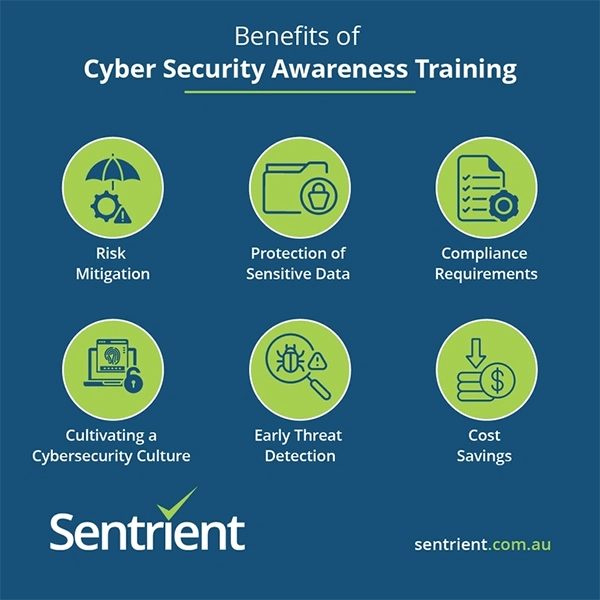
The benefits of cybersecurity awareness are immense:
Third-Party Relationships and the Extended Attack Surface
Every vendor adds value, but also risk. A single weak link in the supply chain can open doors far beyond one organization.
This reality has made third-party risk management an essential component of business strategy. Continuous monitoring, clear contractual obligations around security standards, and regular reassessment are becoming standard practice. The challenge is scale. Large enterprises may work with hundreds or thousands of vendors, making it impossible to give each one the same level of manual scrutiny.
Regulatory Pressure as a Strategic Driver
Governments and regulatory bodies around the world are raising the bar for cybersecurity compliance. New regulations are requiring organizations to demonstrate not just that they have security measures in place, but that those measures are effective, well-documented, and regularly tested.
Compliance is no longer a tick-box exercise. Regulators expect proof that security measures actually work. Failure to meet these expectations carries severe consequences, including substantial fines, legal liability, and restrictions on business activities.
Rather than viewing regulation as a burden, strategic organizations are using compliance requirements as a framework for strengthening their overall security posture. The regulatory environment is also creating competitive differentiation. Companies that can demonstrate robust compliance programs are more attractive to partners, customers, and investors.
Building Resilience for an Uncertain Future
Zero risk is a myth. What matters is how well a business can respond and recover.
Resilience means having tested incident response plans that go beyond the IT department. It means business continuity strategies that account for extended outages and communication plans that keep customers, partners, and regulators informed during a crisis. It also means learning from every incident to improve defenses continuously.
Conclusion
Cybersecurity has quietly transformed into a business enabler. It protects more than data. It safeguards trust, fuels growth, and strengthens competitive advantage.
The businesses that will lead in the years ahead are those that recognize cybersecurity not as a cost center but as a strategic enabler. It provides the foundation on which sustainable growth is built.
FAQs
Why is cybersecurity considered a business strategy today?
How can companies measure cyber risk effectively?
By translating technical risks into financial impact, making it easier for leadership to prioritize investments.
Are employees really a major security risk?
Yes. Many breaches happen due to human error, which makes awareness and training essential.
How do third-party vendors increase cybersecurity risk?
Each vendor introduces potential vulnerabilities. A breach in one partner can affect the entire connected network.
Related Posts