Ans: Though computer information systems can automate and streamline various processes, they can generate output that may still require further minor changes according to the objectives of a firm.
How Computer Information Systems Shape the Future of Work
POST BY
PUBLISHED
April, 28, 2026
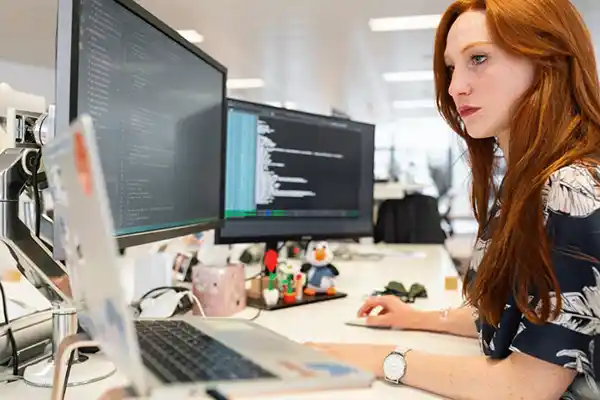
The future of work isn’t transforming dramatically, but being quietly built through intelligent systems that organize information, automate workflow, and connect people across different time zones.
Many industries have already adopted these advanced systems, with them no longer acting like background tools, but shaping how work is structured and delivered, digitizing various processes and streamlining communications with efficiency.
This article explains what this technological shift actually means for the workforce moving forward and how our skills are defined in this period.
Key Takeaways
- Tasks that required manual input are now being handled and independently managed by automated systems.
- These efficient machines are simplifying workflow while also increasing the efficiency of various business processes.
- They have made remote work possible by incorporating a clean dashboard with optimized communication channels.
- Such automated systems need to be secured and strengthened, or they may face failures due to outside cyber threats
Table of Contents:
- Workplaces Reengineered by Information Systems
- Education That Aligns with System-Driven Roles
- Automation Is Redefining Daily Tasks
- Data as the Driving Force Behind Decisions
- Skills That Define the Modern Workforce
- Remote Work Powered by System Integration
- When Systems Fail, Work Stops
- Human Judgment in a System-Driven World
- FAQs
Workplaces Reengineered by Information Systems
Traditional workplaces are being replaced by environments where systems operate independently, manage workflows, and get rid of inefficiencies.
Tasks that once required manual input are not being handled through coordinated platforms, with information being relayed through departments, reducing the chances of delays and miscommunication.
A project that once required endless email chains is now tracked through organized dashboards. Updates are logged automatically. Deadlines are monitored in real time.
Employees are expected to interact with these systems constantly. Training is being adjusted so that workers can interpret system-generated insights. This shift is not optional. It is becoming a standard requirement across industries.
Have these changes made work more efficient or simply more demanding in new ways?
Education That Aligns with System-Driven Roles
As industries evolve, education is being reshaped to match these demands. Academic pathways are being designed to combine technical knowledge with business understanding.
A master of science in computer information systems is often pursued by individuals aiming to work at this intersection, where systems are not just built but strategically applied.
This kind of program not only focuses on coding but also explores how data flows through organizations, how systems implement optimized decision-making, and how security is handled.
Students are trained to think beyond isolated tools and instead understand entire ecosystems.
Employers have started to look for candidates who can clearly interpret system outputs and configure them with organizational goals successfully. It is no longer enough to just know how technology operates, but it must be understood in context.
Automation Is Redefining Daily Tasks

Automation is changing what work looks like daily. Repetitive tasks are being taken over by systems that operate without breaks and with consistency. This considerable shift allows employees to focus on more complex responsibilities.
Administrative duties, for example, are being optimized through automated scheduling and data processing tools. Workers are expected to analyze the output rather than generate it individually. This transition has forced a change in the mindset of organizations.
There is often fear that automation will replace human roles entirely. No, not at all.
What is happening instead is a complete transformation of responsibilities, as work gets reshaped rather than eliminated.
Consider a warehouse where all the inventory is tracked automatically, and employees are no longer counting items manually. Instead, exceptions are managed and processes are improved.
Data as the Driving Force Behind Decisions
Data is now at the center of most business decisions, as systems collect and analyze information continuously, presenting it in easier-to-understand formats, where managers depend on these gained analytics to power strategy.
Reports are generated in real time. Adjustments are made quickly. This level of responsiveness has changed how organizations operate. Decisions are no longer delayed by incomplete information.
A scenario can help illustrate this. A company launches a digital campaign. Within hours, engagement metrics are displayed on a dashboard. If performance drops, changes are implemented immediately. This agility was not possible in earlier work models.
Is reliance on data improving outcomes or limiting intuitive thinking? The answer often depends on how systems are used.
Fun Fact
Automation dates back to ancient Greece, where Hellenistic Greeks created complex mechanical devices, including the Antikythera mechanism, known as the earliest analog computer.
Skills That Define the Modern Workforce
The modern workforce is being transformed by technical and analytical skills, as workers are now expected to understand systems while also applying critical thinking. Adaptability has become a key trait.
- Data analysis and interpretation
- Understanding of system workflows
- Awareness of cybersecurity practices
- Problem-solving in digital environments
- Effective communication across tech-driven teams
These skills are not just limited to IT roles but are becoming essential across industries. Finance, healthcare, and education are all being influenced by system-driven approaches.
It might seem overwhelming at first. Yet continuous learning is often more valuable than static expertise.
Remote Work Powered by System Integration
Remote work has been made possible largely through computer information systems. Collaboration tools and cloud platforms allow teams to function without physical proximity. Work is no longer tied to a single location.
Employees can access systems from anywhere. Communication remains consistent. Tasks are tracked digitally. This flexibility has redefined the workplace.
However, challenges are also present. Security risks increase when systems are accessed remotely. Data must be protected while maintaining accessibility. The balance between convenience and protection is delicate – it requires constant attention.
When Systems Fail, Work Stops
While systems bring efficiency, they also introduce vulnerabilities. When a system fails, the impact is immediate. Operations may halt. Data may become inaccessible. Recovery can be complex.
Imagine a financial institution that relies on a centralized platform for transactions. If that platform goes offline, transactions are delayed. Customers are affected. Trust is compromised.
This is why backup systems and recovery plans are essential. Data must be stored securely. Redundancy must be built into operations. Prevention is always more effective than reaction.
Have enough safeguards been put in place to handle such disruptions?
Human Judgment in a System-Driven World
Despite the advancement of technology, human input still remains important. Systems are tools designed to support decision-making, not replace the need entirely. Creativity and judgment cannot be replicated fully.
Employees are being asked to work alongside systems rather than compete with them. This requires a shift in perspective. Technology should be seen as an extension of capability.
There is a balance being formed between structured systems and human insight – one that blends efficiency with understanding. Organizations that recognize this balance often perform better.
Computer information systems are transforming how work is performed, evaluated, and simplified. Their influence is expanding across industries, creating many new opportunities and challenges, where adaptation is not optional; it is necessary.
So the question remains: will the workforce evolve alongside these systems or struggle to keep up? The answer will define how the future of work unfolds.
FAQs
Q1) Why is human oversight still required to complete processes?
Q2) How has remote work been made possible?
Ans: Remote work has been made effective across different time zones as computer information systems have integrated a combined dashboard with clear communication channels to allow for a disruption-free network.
Q3) How are these systems vulnerable?
Ans: Although these systems bring unmatched efficiency into the mix, they are often susceptible to cyber attacks that risk business continuity and compromise of data across databases.
Q4) How can they be strengthened?
Ans: These systems can easily be strengthened by following fundamental cybersecurity threat detection methods and by incorporating role-based access into their systems.
Related Posts