The best AI video model in 2026 is Google Veo 3.1.
Why Image-First AI Video Works Better? Best Guide 2026
POST BY
PUBLISHED
March, 31, 2026
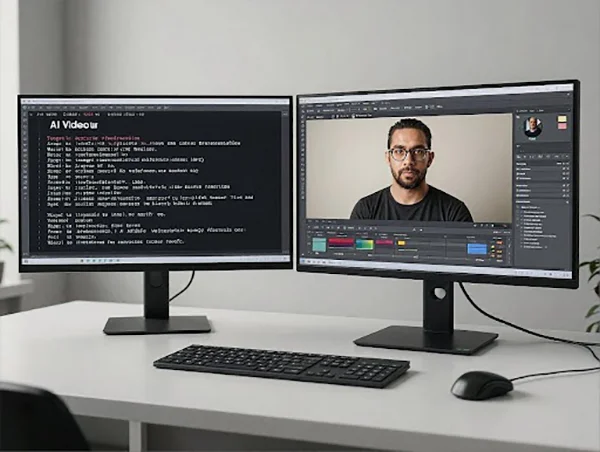
Text-to-image AI was a breakthrough. But the content industry truly shook when text-to-video tools were announced.
However, the anxiety was short-lived as people noticed the shortcomings of the tool: Bad quality, low details and prompt adherence. And the biggest of them all: if you wanted to make a multi-scene video, the scenes had no coherence with one another. Even with the same prompt, the AI used to output differently each time. The industry termed it useless for serious content creation.
Then came the image to animation solutions. Here, you can provide a reference image in addition to your textual prompt. This made the video output considerably less random and reduced the production time of full-fledged pieces to a fraction. A minute-long marketing video used to take 13 days for production, but with AI, it now takes just 27 minutes (Source).
In this article, I’ll answer why image-first video tools are your best bet in 2026. The following sections list the drawbacks of text-first AI video tools, the importance of reference images, and how all this leads to a better workflow in content creation.
KEY TAKEAWAYS
- Image-to-video tools give a closer output to your expectations than text-to-video AI.
- You can input reference images for video creation, but textual prompts are still important for instructional purposes.
- Image-first video creation also helps people with post-production.
- This begets a better content creation workflow that takes less time and effort.
The Prompt-First Mindset Is Useful, but It Is Not Always Practical
I understand the relevance of prompt-first AI when you don’t have a clear idea about what you want exactly. Maybe they have a concept, a mood, or a scene in mind, but no actual visual reference yet. In that situation, prompt writing does a lot of heavy lifting.
The problem appears when people keep using the same method even if they have a usable image. The prompt is asking to reconstruct information that is already available in a better form.
I have seen this happen with portraits, posters, ecommerce visuals, anime-style characters, travel shots, and product photos. The user has the image, but still starts over with text. That often leads to subject drift, altered composition, or a result that technically fits the description while missing the original appeal.
An Image Gives the Model a Clearer Starting Point Than Words Can
Your understanding of a novel can be starkly different from your friend’s, but when it comes to movies, you both are essentially talking about the same thing. This emphasized the interpretiveness of words and the certainty of visuals.
They lock in details that people usually struggle to describe well: composition balance, facial proportions, color relationships, texture priorities, background hierarchy, and the emotional feel of the frame.
That alone changes the workflow. When I start from an image, I am not negotiating the look from scratch. I am deciding what should stay and what should move. The process becomes more about controlled transformation than speculative generation.
This is especially useful when the original visual already works. A good still image contains decisions I may not want to lose. Starting from text risks turning those decisions back into variables.
When Image-to-Animation Is the Better Choice
Image-first AI creation is just the smarter way in most of the cases.
If I want to preserve the subject’s identity, retain the original framing, keep the tone of an illustration, or add lightweight motion to an existing visual, I would almost always rather start from the image itself. That applies to character art, portraits, social creatives, posters, historical photos, and even simple personal images that only need a subtle sense of life.
What makes this approach valuable is not only quality. It is predictability. The more clearly I define the starting asset, the less I leave to chance.
First & Last Frame Technique
Use tools that allow setting initial and final frames to have greater control over the output clip.
When Photo-to-Video Makes More Sense Than Traditional Editing
AI has made the video creation process so accessible that many people have poured into it. The problem arose because most of them don’t have a content creation background.
The good news is that image-to-video solutions take care of that.
These users do not have footage. They have photos. They also do not want a long post-production process. They want to move from still image to usable clip without learning a full editing stack.
That is where AI photo to video starts to feel like a better starting point than traditional editing. It gives users a path that is lighter, faster, and far more aligned with what they already have on hand.
This matters for small businesses, solo creators, casual users, and even marketers who need quick asset variation. In all those cases, the real advantage is not novelty. It is reduced friction.
The Right Starting Point Depends on What You Already Know
You can choose the type of synthetic video creation tool based on what you possess at the moment:
| Starting Point | Best Used When | Main Advantage |
| Prompt-first | You only have an idea | Maximum conceptual freedom |
| Image-first | You already know the look | Better visual control |
| Edit-first | You already have footage | Strong continuity with source material |
That table may look obvious, but many people skip it. They default to prompt-first because prompt-based AI creation gets the most attention. In practice, better results often come from matching the workflow to the asset, not from forcing every project through the same entry point.
Better Workflows Are Often About Reducing Uncertainty
A better workflow involves less time. But that comes naturally if your output is increasingly resembling what you have in your mind.
That is what image-first creation does well. It narrows the problem. It reduces drift. It protects the strongest parts of the original visual. It gives the user more leverage over consistency, which matters a great deal in real-world content work.
When the starting image is strong, the smartest move is not always to ask the system to imagine more. Sometimes the smarter move is to ask it to respect what is already there.
The Future of AI Video May Depend Less on Prompt Skill Than on Input Choice
Prompts will always stay there in AI workflows, as they are required to instruct it on what to do. But these tools are becoming increasingly multi-modal, i.e., taking multiple types of inputs.
If the goal is originality from nothing, prompt-first makes sense. If the goal is to preserve a look, maintain identity, and move quickly toward a usable clip, image-first often wins.
That change in perspective helped me stop blaming weak outputs on prompt quality alone. Sometimes the real issue is simpler: the project did not need better words. It needed a better starting asset.
FAQs
What is the best AI video model in 2026?
What is the 30% rule for AI?
The rule advises limiting artificial intelligence to handle only 30% of the task.
What is the best AI image generator in 2026?
Nowadays, Nano Banana Pro is one the trending AI image generator.
Related Posts