How Marketers Can Build a Smarter B2B Outreach List Using AI Tools
POST BY

PUBLISHED
March, 10, 2026
Building a strong B2B outreach list has always been one of the most important parts of marketing. Without the right contacts, even the best product or service can struggle to gain attention. In the past, marketers had to spend long hours manually searching for potential leads, collecting email addresses, and organizing contact lists. Today, AI tools have completely changed this process.
Artificial intelligence allows marketers to identify the right audience faster, gather verified data, and create highly targeted outreach lists. Instead of sending messages to thousands of random contacts, businesses can now focus on decision-makers who are more likely to respond.
By using the right AI-powered tools, marketers can build smarter outreach lists that improve engagement, increase response rates, and create better business opportunities.
Why Smart Outreach Lists Matter in B2B Marketing
Many outreach campaigns fail because marketers focus on quantity rather than quality. Sending hundreds or even thousands of emails does not guarantee results if those contacts are not relevant to your product or service.
A smart outreach list focuses on people who are more likely to be interested in what you offer. These usually include:
- Decision-makers in companies
- Marketing managers and founders
- Operations leaders
- IT managers and business owners
When marketers reach out to the right people, conversations become more meaningful and productive. This is why list quality is far more important than list size.
How AI Tools Improve Lead Research
AI tools help marketers analyze large amounts of data quickly. These tools can scan company databases, identify relevant industries, and highlight individuals who hold important roles within an organization.
Instead of manually browsing websites and LinkedIn profiles, AI-powered platforms allow marketers to filter leads based on:
- Company size
- Industry type
- Job title
- Location
- Technology used by the company
This makes the research process significantly faster while also improving accuracy.
Using Data Extraction Tools to Build Lists Faster
One of the biggest challenges in outreach campaigns is gathering accurate contact data. AI-powered extraction tools make it easier to collect verified information such as emails, phone numbers, and company details.
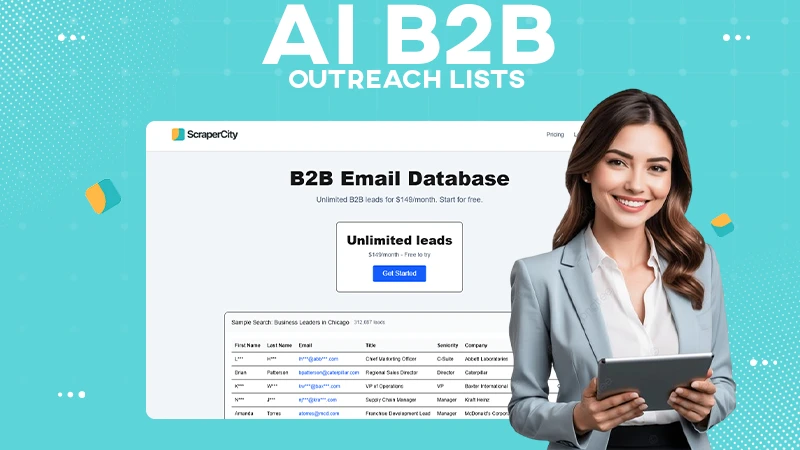
For example, marketers who want to collect prospect data from large databases often use tools like the Apollo data extraction tool from ScraperCity. This type of solution allows marketers to extract large amounts of verified contact information from search results and export them into organized lists.
By automating this process, marketers can quickly build outreach databases without spending days on manual research.
Segmenting Leads with AI
After collecting contacts, the next step is segmentation. AI tools help categorize leads based on different characteristics, which allows marketers to send more personalized messages.
Common segmentation categories include:
- Industry
- Company size
- Job role
- Geographic region
- Business technology stack
For example, a message sent to a startup founder should sound different from a message sent to a corporate IT manager. AI tools make it easier to group similar prospects together so outreach campaigns can be more targeted.
Personalization significantly increases open rates and reply rates.
Evaluating the Best Data Platforms
Not all data platforms offer the same level of accuracy or features. Some tools focus on large databases, while others specialize in enrichment, automation, or analytics.
Before investing in a lead generation platform, marketers should analyze the strengths and limitations of different services. Reading a detailed comparison of sales intelligence tools can help businesses understand which platform best fits their outreach strategy.
This type of comparison usually examines factors such as data accuracy, pricing, integrations, and available features.
Making an informed decision helps marketers avoid wasting resources on tools that do not meet their needs.
Writing Outreach Messages That Get Responses
Even with the best AI tools and contact lists, outreach success depends heavily on messaging. Many marketers still make the mistake of sending generic sales emails that look like spam.
To improve engagement, outreach messages should:
- Be short and easy to read
- Mention something specific about the company or industry
- Focus on solving a problem instead of promoting a product
- Include a simple call to action
Personalization can dramatically increase response rates. When prospects feel that the message was written specifically for them, they are more likely to reply.
Consistency Is the Key to Successful Outreach
Building a strong outreach system is not a one-time activity. Successful marketers treat lead generation as an ongoing process.
AI tools help automate many parts of this workflow, including:
- Lead discovery
- Contact data extraction
- List segmentation
- Outreach scheduling
- Performance tracking
By continuously refining their outreach strategy, marketers can improve results over time and build a reliable pipeline of potential customers.
Final Thoughts
AI tools have transformed the way marketers approach B2B outreach. Instead of relying on manual research and mass messaging, businesses can now build highly targeted outreach lists based on accurate data and intelligent analysis.
With the help of advanced lead generation platforms, marketers can identify the right prospects, organize their contact lists, and create more personalized campaigns. Tools that automate data collection and provide insights into different platforms make the entire process faster and more effective.
When used correctly, AI-powered outreach systems allow businesses to focus less on searching for leads and more on building meaningful relationships with potential clients.
Related Posts