AI helps optimize shipping routes, predict demand, and automate inventory management.
Innovative Strategies for Managing International Trade and Logistics In 2026
POST BY
PUBLISHED
February, 20, 2026
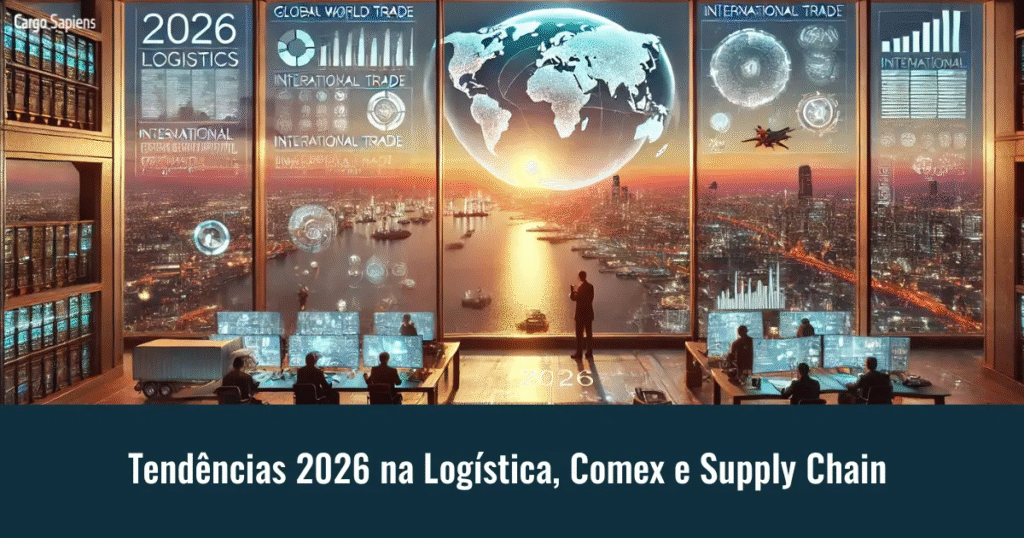
Are you willing to explore strategies that can manage International Trade and Logistics? If yes, then the source is here.
According to Hanseatica, the global market for outsourced logistics services was valued at more thanUSD 1.068 trillion in 2024 and is projected to exceed USD 2 trillion by 2030.
Therefore, this article aims to discover the innovative strategies for managing international trade and logistics in 2026 and see how these strategies contribute to desired outputs and more!
Innovation has framed the roots of International Trade and Logistics lately. And in order to manage both of these, it has become vital that the strategy inculcates innovation and inventions within the running global cycle.
Key Takeaways
- Analysing AI and automation
- Understanding Blockchain Technology
- Knowing Smart Ports
- Driving through sustainability
- Studying the role of Augmented Reality
1. AI and Automation: Revolutionizing Supply Chain Operations
Artificial intelligence (AI) and automation have held the central global stage; these don’t just reflect what‘s in the future, and is also shaping contemporary realities.
AI is transforming international trade management in several ways, such as :
- AI has enabled the prediction of market demand and supply actions
- It has even optimised the time zones of receiving and delivering shipments, leading to a s,mooth trade
- The idea of stocks, inventory, and surplus has benefited the market players as well
- The heavy custom lines can now be skipped with automation taking its place
With predictions made beforehand, the market players get a better risk analysis, investment-return details, and even the minor ideas of each depreciation.
Hence, the intervention of AI and automation hassmoothened the market working making it more analytical towards risks and keeping it well informed.
2. Blockchain: Ensuring Transparency and Security
The primary question that arises whenever the term Blockchain is heard what does it mean?
A Blockchain, in simple words, is a digital tool that allows to keep a record of transactions, mainly bitcoins and cryptos.
Basically, it relieves you from the stress of carrying heavy account books for evaluation or going through bundles of newspapers for analysing the market statistics.
Multiple businesses are spread across international borders; for such businesses, blockchain can:
- Ensures accountability both for customers and the business
- Reduces the use of lawyers and intermediaries to specialise in production
- Tracking of products to know the health of the supply chain
- Easily accessible records for better references
As stated earlier, Blockchain can add revolutionary and constructive changes to your businesses, making them equipped for international markets and logistics.
3. The Rise Of Smart Ports and IoT-Enabled Infrastructure
Smart ports powered by the Internet of Things (IoT) are the arcs of transformation in 2026.
The addition of smart ports is made to have sustainable and technically equivalent sea ports, with IoT-connected devices contributing to :
- Improve how the production is handled across the sea
- Reduce the intermediaries
- Boost the profits and production
4. Sustainability In Logistics: Green Trade Practices
“With great advancements come great responsibilities.” Sustainability has framed the core of the international system these days.
Carbon Footprint plays a great role in determining the reputation of companies, which makes it important for them to switch to environmentally sustainable practices in their business.
To meet these expectations, many companies are:
- Investments in ecological projects can reduce carbon footprint, depicting social responsibility
- Enabling sustainability in the company outlook and transport
- Utlising environment friendly practices such as inhabiting it in brand promotion, production, and even transportation.
This makes sustainability an important step.
Fun Fact : 9 of the top 10 world container ports are Asian.
5. Real-Time Visibility and Predictive Analytics
Real-time visibility has emerged as an important concept for regulating logistics of business practices .
These help businesses to:
- Tracking real-time locations of businesses
- Constant updates about the status, alerts, and notifications
- Providing a better implementation procedure
This strategy strengthens the navigational and predictive analytics of the marketplayers.
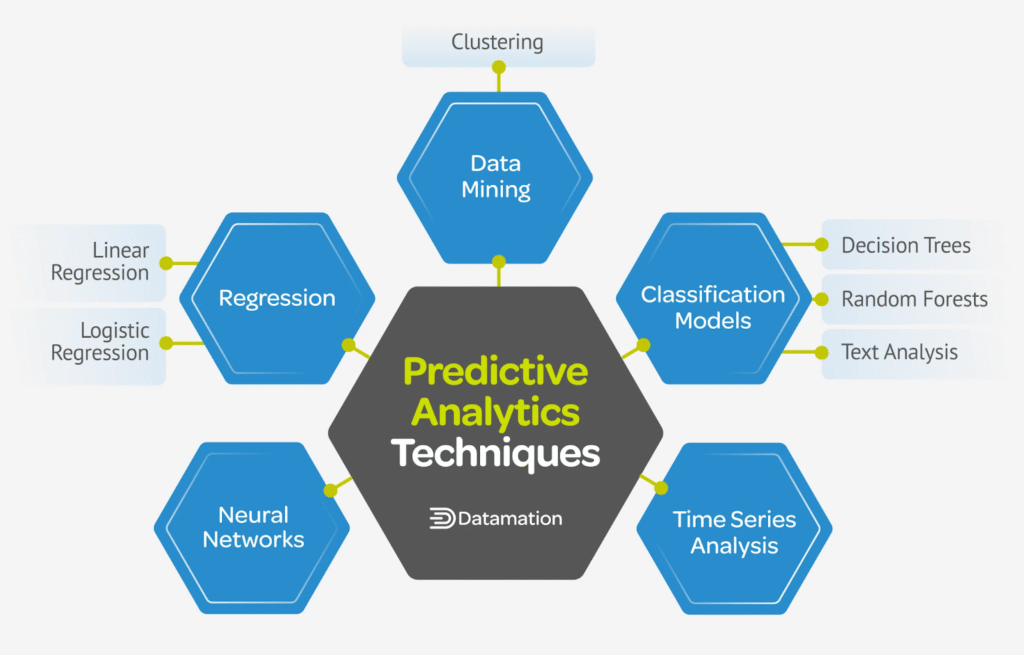
The techniques utilised in Predictive Analytics can be seen as :
6. Digital Twins and Virtual Simulation
Digital twins have made the task of having a virtual replica comparatively simpler. These complement the changes in the physical world with constant updates, making them fit for changing market trends.
Creating replicas helps in :
- Enhancing efficiency and improving inventions.
- Contributes to a better lifecycle of inventories
- Helps in predicting the success and failures of investments
Another digital twin tool for better branding and popularity is an animation maker to create visual effects and provide creative insights to the product marketing.
7. The Role Of Augmented Reality In Logistics
Augmented Reality (AR) is an important tool that contributes to timely delivery and work efficiency without any procrastination.
It is very helpful in :
- Reducing Efficiency
- Improve Productivity
- Visualise data
According to ProgramAce, Industry leaders like DHL and KNAPP AG have pioneered using augmented reality in logistics. DHL has integrated AR into its warehousing operations, significantly enhancing efficiency and accuracy.
8. Leveraging Cloud-Based Logistics Platforms
In order to stay competitive, the Cloud computing technique was introduced and its to have an edge in technology in the market.
Cloud platforms enable:
- Faster Integration of business technology
- Allows more mobility
- Enhances security and compliance
This advancement has changed the outlook of business from production-oriented to tech-oriented.
9. Innovative Packaging and Cargo Solutions
With a rise in demand and supply, the market shows similar changes, and to simultaneously go with the flow, a highly skilled and well-prepared network becomes essential.
Two of the latest packaging innovations involve:
- Polylactic Acid: derived from corn starch
- Polyhydroxyalkanoates: derived from microbial fermentation
Companies are using technology to optimize every stage of the packaging process, reducing costs and enhancing sustainability.
Final Thoughts
The international trade and logistics industry in 2026 is defined by the new emerging innovation aligned with market outcomes.
From AI to Blockchain, everything impacts the production and, relatively, the market.
Adopting these technologies will enable businesses to remain competitive, reduce costs, and meet the growing demands of global trade.
FAQs
How is AI transforming logistics management?
How can blockchain improve international trade?
Blockchain ensures secure, transparent transactions and reduces fraud in global trade.
What are smart ports and how do they work?
Smart ports use IoT and real-time data to improve port efficiency, safety, and tracking.
How can companies make their logistics operations more sustainable?
By using electric fleets, optimizing routes, and implementing sustainable packaging practices.
Related Posts