Shopify helps in selecting a design, adding products, accepting payments and analysing data.
5 Best Shopify Builders for Beginners
POST BY
PUBLISHED
April, 2, 2026
Starting an online store can get really stressful, especially when you are new to e-commerce and the related concepts.
This process is highly complex, involving several stages, navigating through designs, understanding sales of products, choosing the right apps and a lot more!
But using the Shopify building tools can change these dynamics. These tools help in simplifying the process, eliminating the need for coding or design skills.
So, if you are a beginner, have a look at this article to lay your hands on the top 5 Shopify builders and know their uses!
1. CreateMyStore.ai
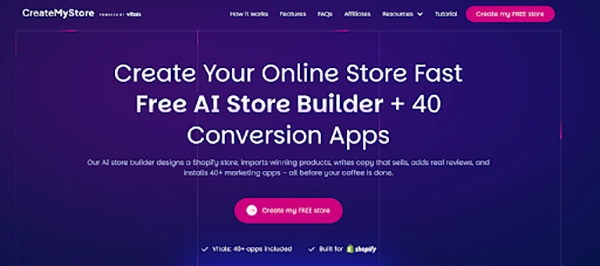
CreateMyStore.ai was practically built with beginners in mind.
This is why the entire process is :
- guided
- visual
- and requires zero technical or design knowledge.
This means you can simply pick a product niche and a design you like — the AI takes it from there.
This provides you with a large variety of :
- product descriptions
- designs your store
- imports real customer reviews
- and even installs over 40 marketing and conversion apps automatically.
Towards the end, you receive a fully functioning, conversion-optimised Shopify store that’s ready to sell from the moment it’s handed to you.
It is considered best for: First-time entrepreneurs with no design or coding experience.
For a first-time store owner, that difference is enormous — you skip the weeks of learning curve entirely and go straight to the part that matters: getting sales.
As a result, the building is free, and you get to keep 100% of the profit as well.
2. Shopify’s Built-in Store Builder
Another key tool for the build-up can be the Shopify Built-in Store builder, which walks you through the basic ideas of building a store step-by-step.
It’s a great introduction to the Shopify ecosystem and helpful for understanding how the platform works.
In such cases, it is a guided setup rather than a complete AI builder.
Which means you’ll have to upload: your products, write your copy, and install apps yourself.
Such platforms are well-suited for: Beginners who are keen to learn how Shopify works while building.
It is even free with any Shopify plan.
3. BuildYourStore.ai
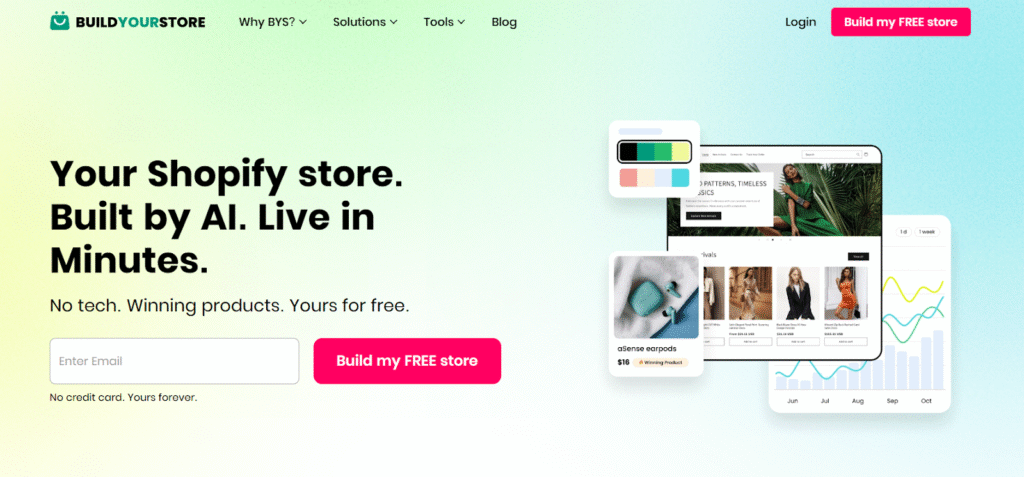
BuildYourStore.ai provides simple solutions by automating product selection and store setup.
You choose a niche, and it loads your store with products, a customizable theme, and ready-to-sell pages.
The platform is particularly appealing for beginners because it removes decision fatigue — you’re not starting from a blank canvas.
This is particularly helpful for Beginners who want niche-specific stores without decision overload.
4. GemPages
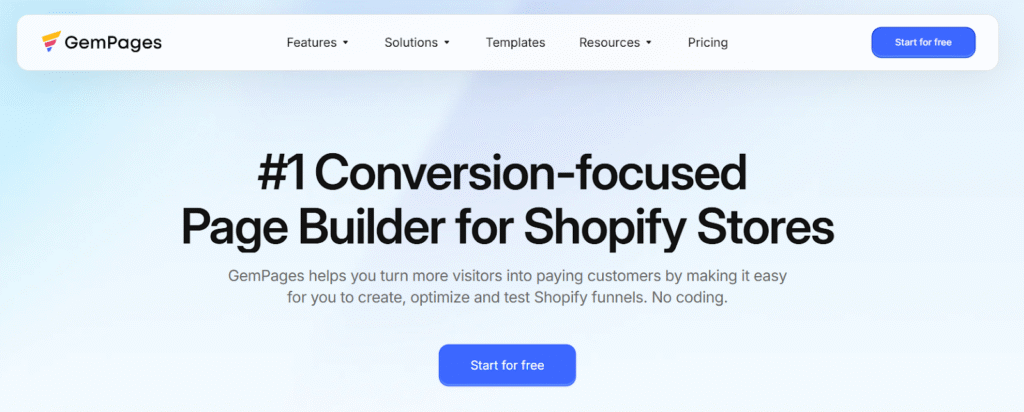
Gem Pages is a drag-and-drop Shopify page builder that’s beginner-friendly while still offering a good degree of design control at the same time.
It includes an Image-to-Layout AI feature that can turn a screenshot or inspiration image into a working Shopify page.
It’s ideal for beginners who already have a product in mind and want more control over how their pages look.
5. PageFly

Page Fly is one of the most popular Shopify page builders on the app store, with over 100 pre-designed templates to choose from.
This provides you with a better variety than other platforms.
It’s beginner-friendly because you can start with a template and simply swap in your content — no design skills needed.
The pricing involves a free plan and further paid plans starting at $24/month.
Conclusion
The right Shopify builder can help you turn the idea of having a business into reality without facing any technical hurdles.
So, if you intend to do so, these Shopify builders offer the best way forward, offering you everything you need to build a professional, conversion-ready store.
FAQs
How does Shopify work for beginners?
What are the top 5 products on Shopify?
The most profitable Shopify products are: health supplements, skincare, fitness gear, jewellery, and home decor, etc.
Can I use multiple themes in Shopify?
You can add multiple themes to your account to try out new themes; these can help you keep seasonal versions of your published theme.
What are the seven strategies of selling?
The seven major strategies of selling are: prospecting, approach, presentation, handling objects, chasing, and follow-up.
Related Posts