According to the recent updates, Headshot Pro makes the most photo-realistic AI headshot generator. It promises at least one profile-worthy AI headshot in every order.
How to Choose the Best AI Headshot Generator for Professional Photos in 2026
POST BY
PUBLISHED
March, 28, 2026
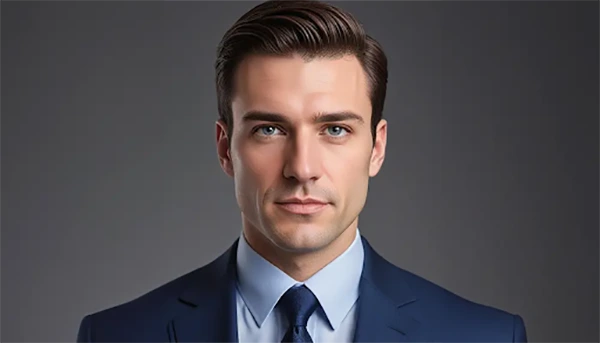
The AI headshot generator evolution has been significant over the years. It has even evolved to such a phase that the results can even match the studio photography now.
Although the shift is progressive in its way, it has increased the confusion in choosing. Because every tool you look at appears great for carrying out the task efficiently.
Which is why choosing the right AI headshot generator in 2026 is not just about finding a technology and knowing how to work with it, but also about assessing whether the technology fits well or not.
So, if you want your results to match your expectations, explore this article that discusses the leading option for the same.
Key Takeaways
- HeadshotMaster: best for enabling instant access and frictionless headshot generation
- Aragon AI: best for enabling high-volume paid image generation workflows
- Canva: best for enabling headshots inside a broader design environment
- Headshotpro: best for enabling high-resolution batch output for detailed use cases
Comparison Overview
To best understand what suits your requirement, let’s compare different AI headshot generators listed as follows :
| Feature | HeadshotMaster | Aragon AI | Canva | Headshotpro |
| Generation speed | enables results in ~6–15 seconds per image | Provides results in ~9 sec–1 min per image | Boosts results in up to ~1 min per image (free tier) | Allows results in ~1–3 hours per batch |
| Pricing / free tier | enables unlimited basic usage without login; advanced usage enables ~4 generations/day with account | Permits paid usage at ~$0.75–$0.85 per image; requires payment to access results | Grants free daily usage quota; paid usage enables ~$0.01–$0.10 per image | Qualifies paid usage at ~$0.84–$0.97 per image; requires upfront payment |
| Input requirements | allows generation from ~1–4 photos | facilitates generation from ~6–10 photos | promotes generation from a minimum of ~1 photo | encourages generation from a minimum of ~15 photos |
| Output quality | Stimulates generally realistic outputs with variable likeness depending on the input | Fosters high-resolution outputs with paid enhancement options | Encourages usable outputs for design workflows | Boosts up to ~4K resolution outputs |
| Key limitation | enables inconsistent likeness and occasional over-smoothing | Promotes no access without payment and higher photo requirements | Fosters a limited free quota without retries | Helps in long processing times and high input demand |
How AI Headshot Technology Has Improved
AI-generated headshots have moved from novelty outputs to practical professional assets over the years.
Improvements in various areas such as :
- facial mapping
- training data quality
- and rendering speed now enables users to get usable portraits almost instantly.
Instead of waiting for studio scheduling or dealing with complex editing tools, users can now generate multiple professional-looking options in seconds.
Making the task easier and time-saving.
That speed and accessibility shift is what has made these tools part of everyday workflows rather than experimental tech.
What Makes the Best AI Headshot Generator?
Several factors now define what “best” actually means in this category:
- Speed matters because faster generation enables quick iteration when refining appearance or style.
- Pricing matters because some tools unlock value immediately while others require upfront commitment.
Apart from these primary factors :
Input requirements influence how quickly someone can start generating usable results.
Output quality determines whether the final images feel professional enough for LinkedIn, portfolios, or company profiles.
And limitations—like quotas, login requirements, or processing delays—often decide whether a tool feels convenient or restrictive in practice.
The best choice depends on how these factors balance for your specific use case.
This evaluation helps in making the right choice as per your convenience.
Competitor Breakdown
Now, let’s move on with the competitor breakdown to see which tool matches the contemporary demands.
These are :
Aragon AI
Aragon AI enables paid, batch headshot generation, producing results across a range of styles based on user-provided photos.
It enables results in roughly 9 seconds to 1 minute per image and requires between 6 and 10 input photos.
Pricing enables usage at approximately $0.75–$0.85 per image, with access only after payment. Output sets typically include 40–100 images per session, with enhanced resolution available through additional paid options.
The experience is structured around committed, high-volume generation, making the task easier.
Canva
Canva enables AI headshot creation within a broader design platform, supporting both casual and design-integrated workflows.
Suitable for both personal and professional requirements.
It enables results in up to about 1 minute per image on the free tier and requires at least one input photo.
Usage enables a free daily quota, while paid usage enables access at roughly $0.01–$0.10 per image.
Access requires account login, and free usage resets daily without retry flexibility. Outputs are designed for immediate integration into design projects.
Headshotpro
Headshotpro enables high-resolution batch generation focused on detailed output quality. It enables processing times of approximately 1 to 3 hours per batch and requires a minimum of 15 input photos.
Pricing enables usage at roughly $0.84–$0.97 per image, with an upfront payment required. Each session enables 30–70 images, with outputs reaching up to 4K resolution and a single redo option.
The workflow is structured around slower, high-detail generation.
This breakdown can help you choose the right tool based on price, working nad features as well.
HeadshotMaster: Access-First AI Headshots
The access model is where HeadshotMaster stands out most clearly. Instead of requiring setup steps or upfront commitments, it enables immediate generation with minimal friction.
The AI Headshot Generator experience enables users to start with as few as one photo and generate results in seconds.
This makes it especially practical for quick testing or iterative refinement without the overhead of preparation.
The system enables input from 1 to 4 images, allowing users to begin without assembling large photo sets.
The basic model enables unlimited usage without a login.
While the advanced model enables around four generations per day for registered users.
In terms of speed, it enables output in approximately 6–15 seconds per image, which supports fast experimentation cycles.
Users can quickly adjust inputs and regenerate results without delay.
The platform also enables access to more than 20 scene variations, supporting different professional contexts such as corporate, creative, or neutral backgrounds.
There are some trade-offs. Likeness consistency can vary depending on input quality, and smoother skin rendering may sometimes appear more processed than expected. Even so, the low-friction access model makes it easy to test and iterate quickly.
Who Benefits Most?
Many users run into the same issue when trying AI headshot tools: the setup process often feels heavier than the actual need.
What makes it tough is :
- Uploading large photo sets
- creating accounts
- and committing to payment before seeing results can slow down what is usually a simple goal—getting a usable professional image quickly.
For people who just want something fast and flexible, HeadshotMaster tends to fit naturally into that moment.
It suits well for :
- Job seekers refreshing a profile
- Freelancers updating portfolios
- Or anyone experimenting with different professional looks can benefit from being able to generate results immediately without committing upfront.
The experience feels closer to quick iteration than structured production.
On the other hand, users working in teams or producing large, standardized image sets may lean toward tools built around batch workflows or design ecosystems.
In those cases, structured generation or integrated editing becomes more important than instant access.
Conclusion
Each tool supports a different kind of workflow depending on what “best” means in practice.
And you opt for the right choice based on your priority.
If your priority is speed of access and minimal setup, the workflow offered by HeadshotMaster’s AI Professional Headshot Generator makes it easy to start generating without delay.
Its strongest differentiator is enabling unlimited basic usage without requiring a login, which reduces friction at the very first step.
Change begins with opting for new and appreciating the old, so if you want your headshots to match the trends, make sure your requirements match the tools you choose.
FAQs
What is the best AI for making a professional headshot photo?
What is the best time of the day for headshots?
The time frame which is considered best for the headshot is after sunrise and before sunset. It is often preferred because of the reddish colouring that the sun gives off.
What is the most powerful AI image generator?
Adobe Firefly offers a lot of styles and artistic options; you can even take advantage of the robust pre-generation settings to set the aspect ratio and style.
What is the trend of headshots in 2026?
The 2026 trends see the headshots as modern and yet polished, leading to a rise of bold suits, textured walls, soft natural light and so on.
Related Posts